
Flat single-layer panels
Finley's housing stock centers on 1983, six years ahead of the broader service area's 1981-2000 build window, so doors here are more likely to be the flat steel, single-layer panels common in that earlier run.
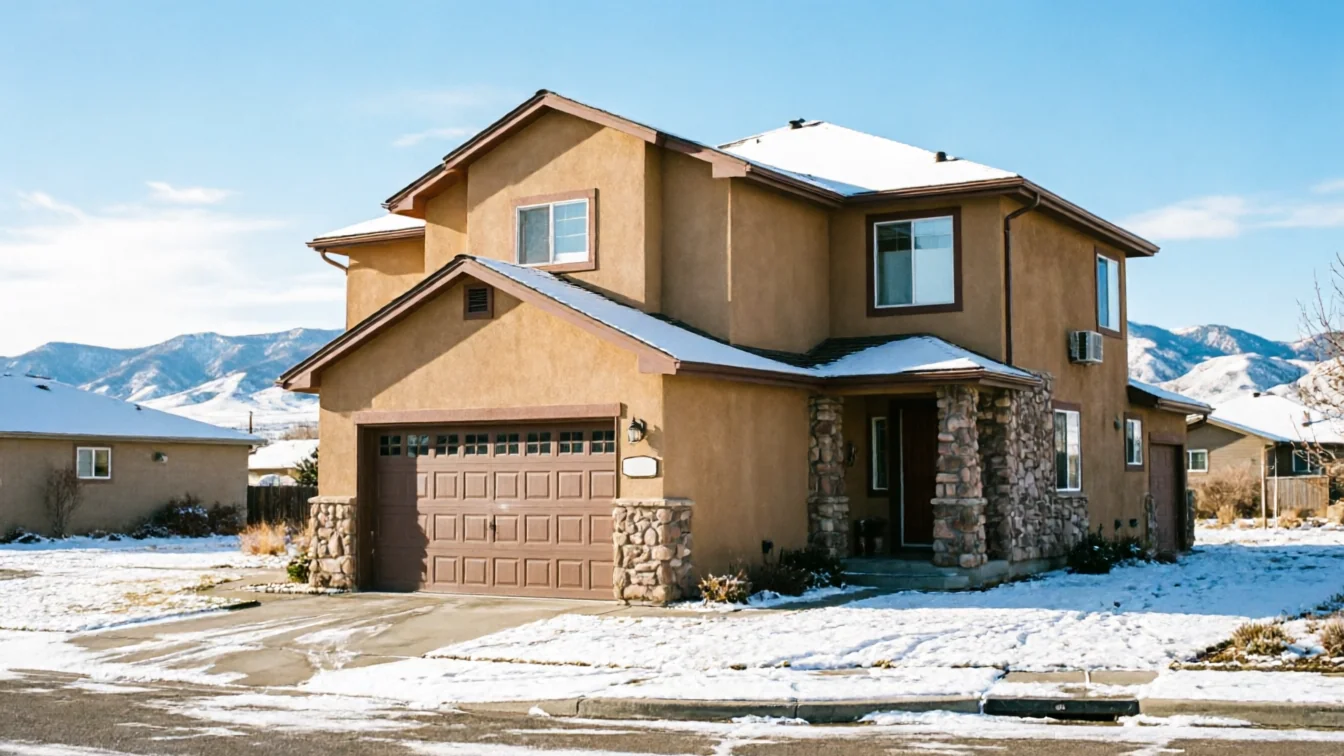
Finley, Kennewick
Finley homes mostly date to 1983, six years ahead of the wider service area's build window. That gap changes which panels still exist and what a repair costs.
Pricing
What a panel job costs in Finley comes down to three things: how many panels you need, whether the color and ribbing pattern are still made, and whether the track and hinges underneath are original.
Finley's housing stock centers on 1983, six years ahead of the broader service area's 1981-2000 build window, so doors here are more likely to be the flat steel, single-layer panels common in that earlier run.
Those panels are harder to match exactly than the newer textured, insulated styles that came later in the area's building boom. We don't quote a flat number over the phone because a two-panel match on a door that's still in production is a different job than replacing a full section on a discontinued run.
What we can tell you up front: if the door is a common width and the manufacturer still makes that profile, you're looking at a panel swap, not a full door. If it doesn't match, we'll say so before we order anything, because ordering a panel that's close but not right wastes your money and our trip.
Local causes
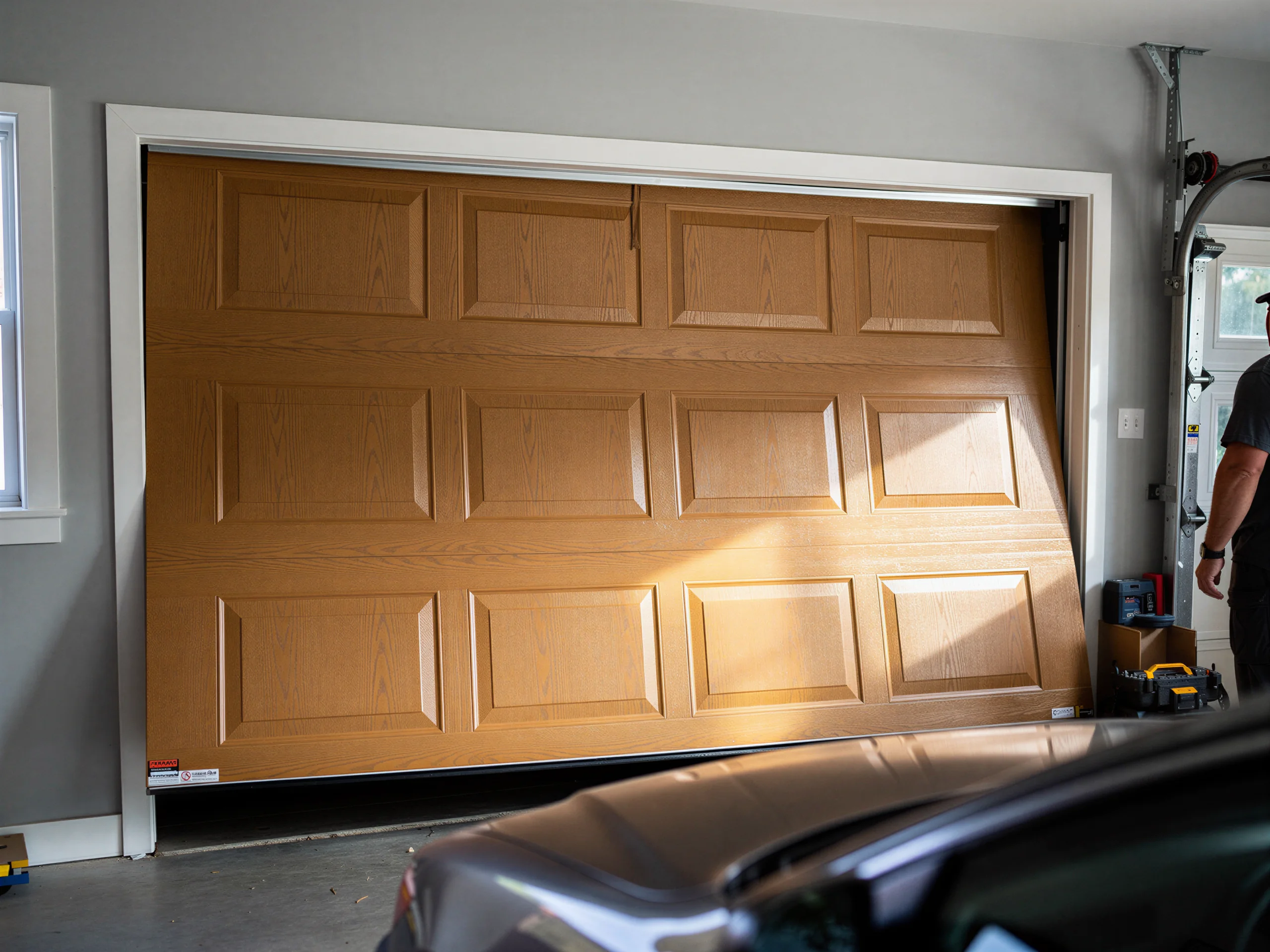
Panels fail in Finley for the same mechanical reasons they fail anywhere - a car backs into one, a basketball dents a low panel, a cable snaps and drags a section against the track - but the age of the stock changes what breaks and how it's built. Doors from the early-to-mid 1980s run tend to be thinner-gauge steel with less reinforcement at the bottom panel, the one that takes the most abuse from cars, bikes, and weather at ground level. Combine that with the region's cold moderate climate band, and you get steel that's already lived through decades of freeze-thaw cycling at the seams and fasteners. Rust starts at the bottom corners first, and once a panel rusts through, it stops holding its shape under spring tension - that's when a dent turns into a door that won't track straight. Newer insulated doors handle that stress better because the foam core adds rigidity the old single-layer steel never had.
On the truck
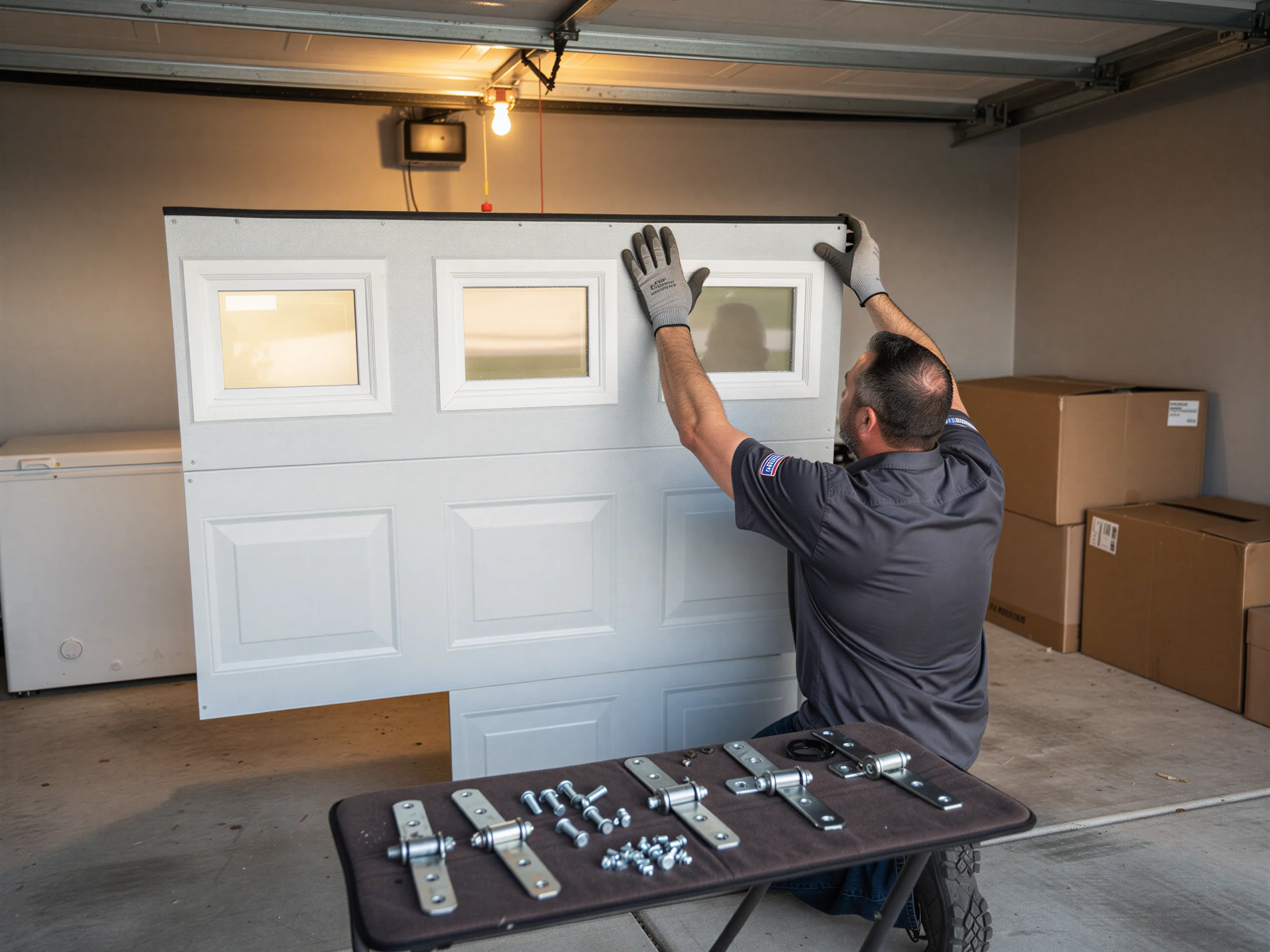
We carry panel sections in the common widths and the standard raised and flush profiles that cover most of what's still running in this corner of the service area.
What we don't carry is every discontinued color and rib pattern from forty-year-old production runs - if your door's an uncommon shade or an obsolete panel height, we order it rather than guess.
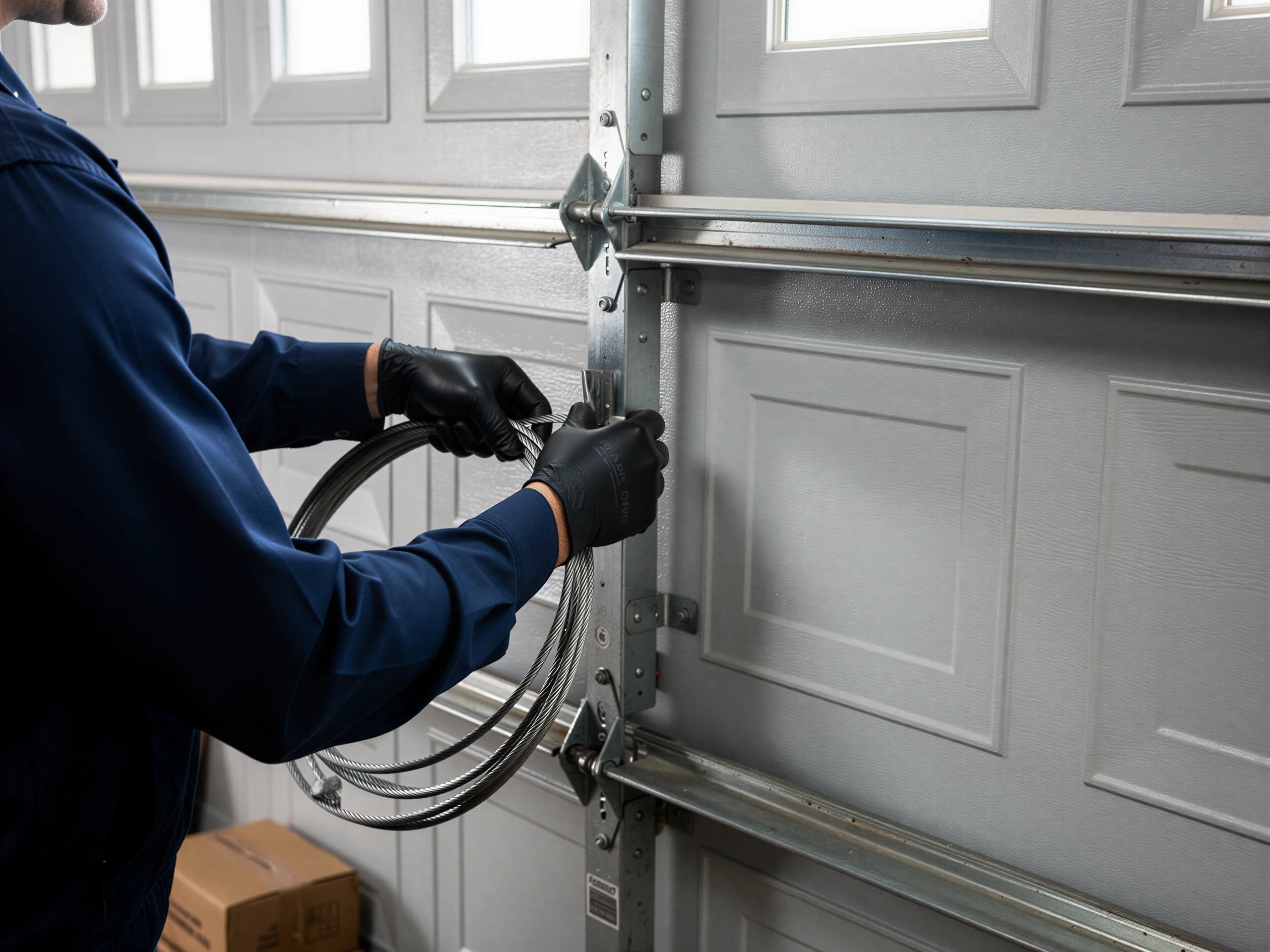
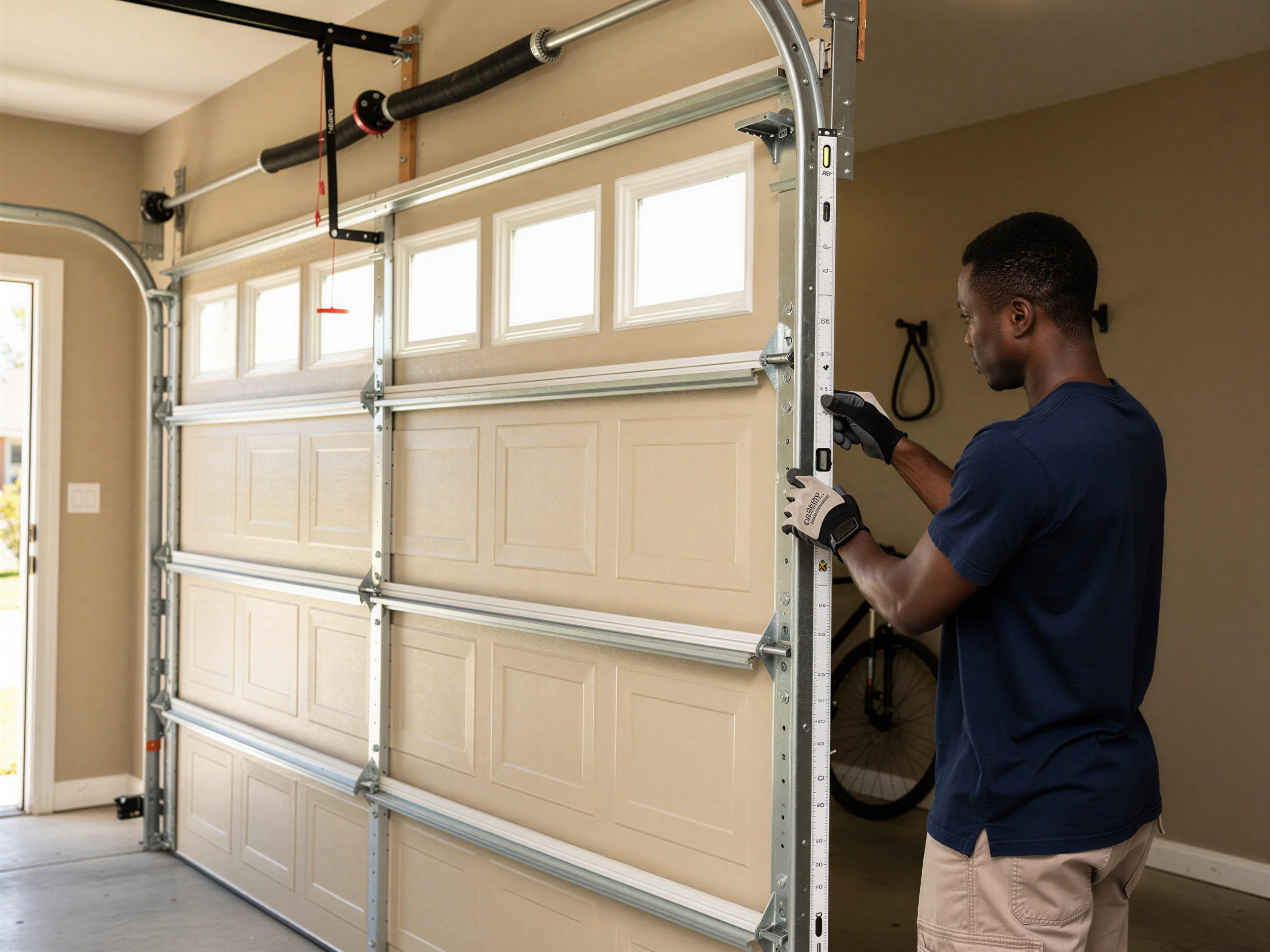
We also carry the hardware that panel work actually depends on: hinges, end stiles, and the fasteners sized for older steel, because swapping a panel onto worn-out hinges just moves the problem down the door. Rollers and cable get checked at the same time, since a panel job is the moment you can see the whole door's condition without taking anything else apart.
One honest limit: if the bottom panel's gone soft at the bolt holes from years of moisture, we'll tell you a patch won't hold and the better money is a new bottom section, not a repair that fails again in a season.
Job timing
A straight panel swap on a door that still has its match in stock is usually a same-visit job once the part's on the truck. What stretches it out is the ordering - at seven miles out from Kennewick, the drive itself doesn't add time to the repair, but waiting on a panel that has to come from the manufacturer does. We measure and confirm the exact section, width, and hinge spacing before we order so there's no second trip for a part that doesn't fit. With 1,846 households in this part of the service area, a fair number of driveways still carry the same flat steel panels that went up when these subdivisions were built, which means we see the same handful of common widths and profiles repeat often enough to know what's likely to be in stock versus what needs a week's wait.
Questions
If your door's manufacturer still produces that panel width and profile, yes, closely. If your door dates to the early 1980s and the run's been discontinued, an exact match may not exist and we'll tell you that before ordering, so you can decide between a close match or a full door.
It takes the most direct hits - cars, bikes, debris - and sits closest to ground moisture. On older single-layer steel doors common in Finley's 1983-era stock, that panel also has the least reinforcement, so rust and dents show up there years before the rest of the door.
It depends on the manufacturer and whether the profile is still in current production. We'll give you a real timeline once we've identified the exact panel, rather than a guess that doesn't hold up.
If the door is old enough that hinges, track, and other panels are also near the end of their life, patching one section can mean you're back out again within a year or two for the next failure. We'll flag that tradeoff rather than sell a panel job that doesn't make sense.
Explore more
Ready when you are
Kennewick Garage Door Pros repairs and installs garage doors, springs and openers in Kennewick, WA and the surrounding area.