
Photo-eye and hinge checks
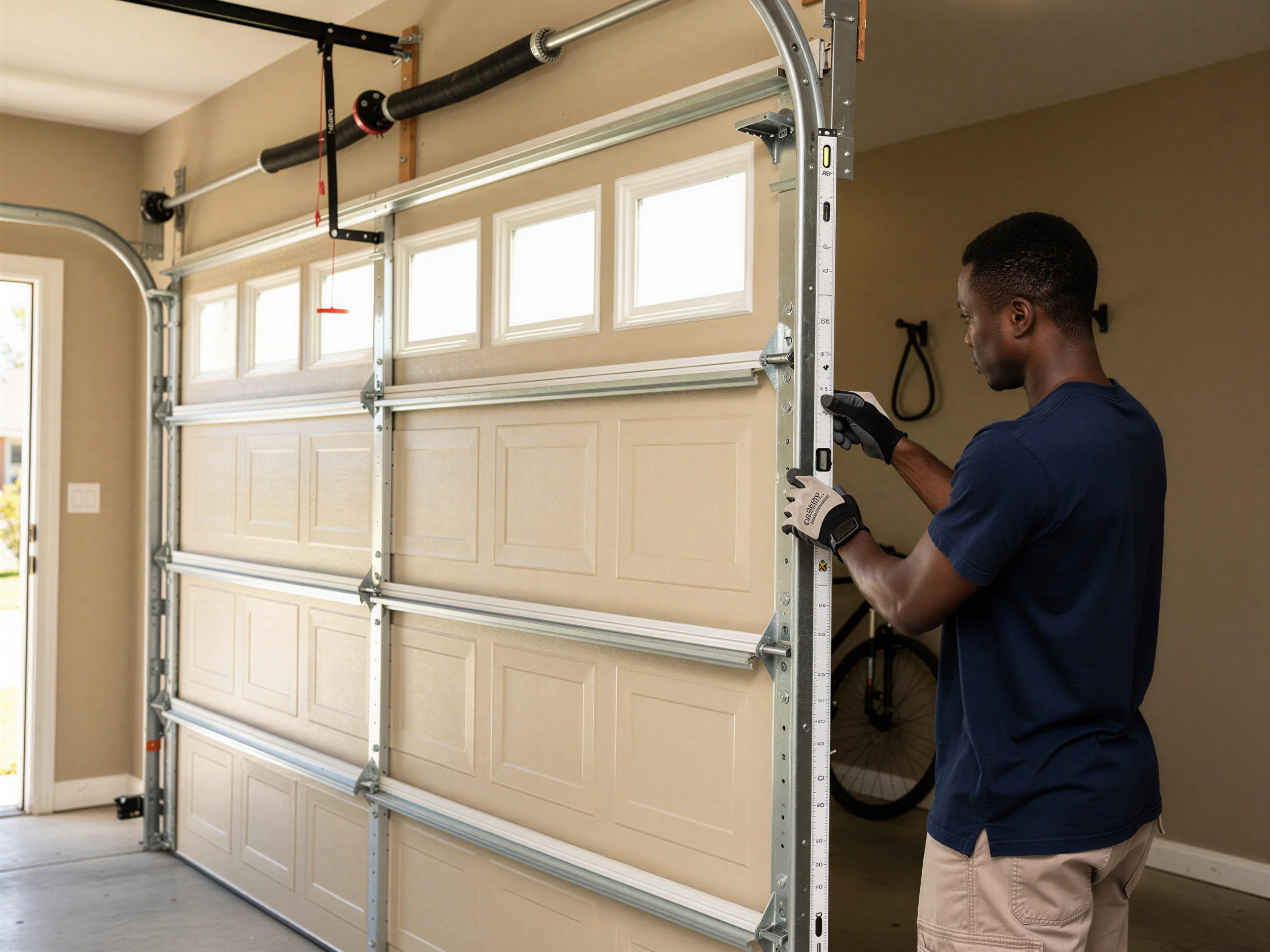
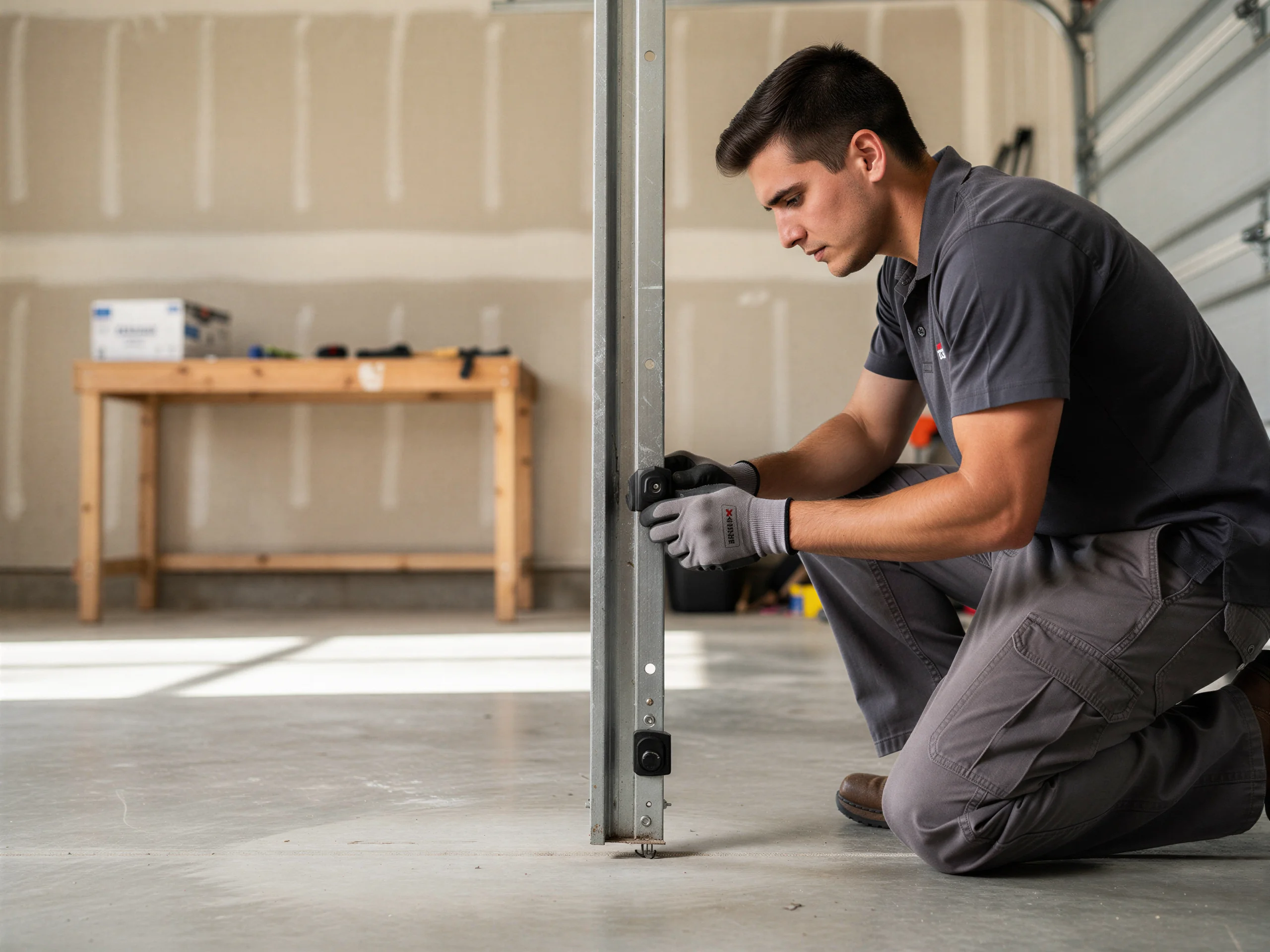
Check the photo-eye sensors near the floor for dust or misalignment if the door won't close. Tighten loose hinge bolts if you can reach them safely. What you shouldn't touch: the torsion spring itself.
West Richland, Kennewick
West Richland homes went up around 2000, newer than most of the area. We fix the torsion-spring doors and chain-drive openers that came with that build wave, from our Kennewick truck.
On the truck
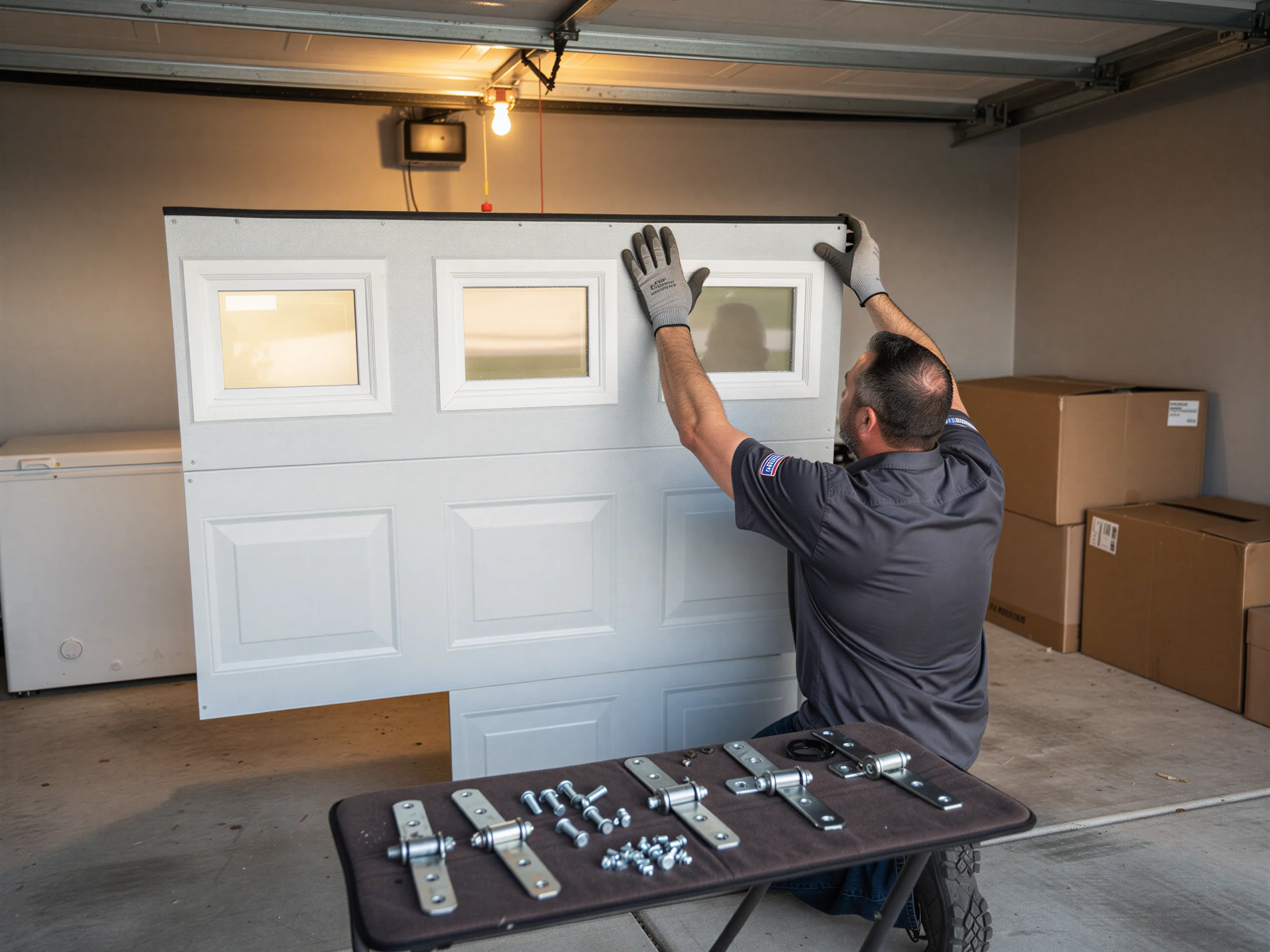
The doors we're pulling parts for in West Richland aren't the stock we carry for the older side of the service area. Most houses here went up around 2000 - about a decade newer than the 1989 median across the rest of our territory - so what's bolted to the header is a mid-weight steel sectional door, usually a 16-foot double or a pair of 9-footers, hung on torsion springs rather than the side-mounted extension springs you'd find on older stock. That means the truck carries torsion spring sets in the sizes that match 2000-era door weights, same-era roller and hinge hardware, and chain-drive opener parts, since that's what shipped standard in new construction through that period. We're not guessing at hardware when we roll out here; the build era tells us most of what we need before we open the panel. What we don't carry is obsolete extension-spring hardware or the brittle wood-panel doors common on much older houses - that's a different call, with different parts, and it's rare to find on this side of things.
DIY or pro
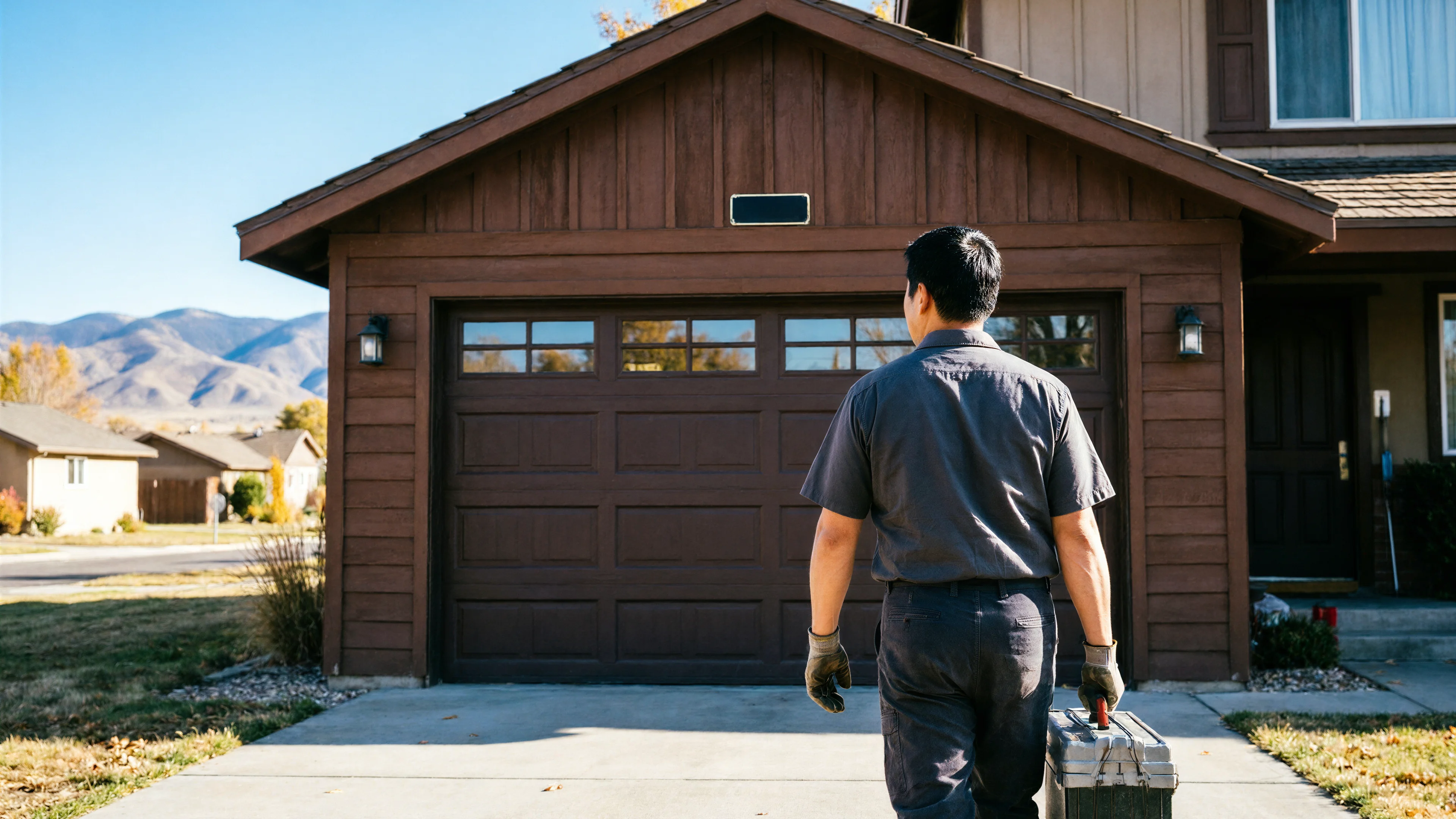
There's real stuff a homeowner can check before calling anyone. Pull the release handle and see if the door moves smoothly by hand with the opener disconnected - a door that's hard to lift by hand has a spring problem, not an opener problem, no matter what the opener is doing.
Check the photo-eye sensors near the floor for dust or misalignment if the door won't close. Tighten loose hinge bolts if you can reach them safely. What you shouldn't touch: the torsion spring itself.
These doors carry two springs wound to hold the full weight of a 16-foot steel door, and that's enough stored force to break a finger or worse if the winding cone slips.
We don't recommend DIY spring work on any door, and we won't talk anyone through it over the phone. If the fix is a spring, that's a call, not a weekend project.
Warning signs
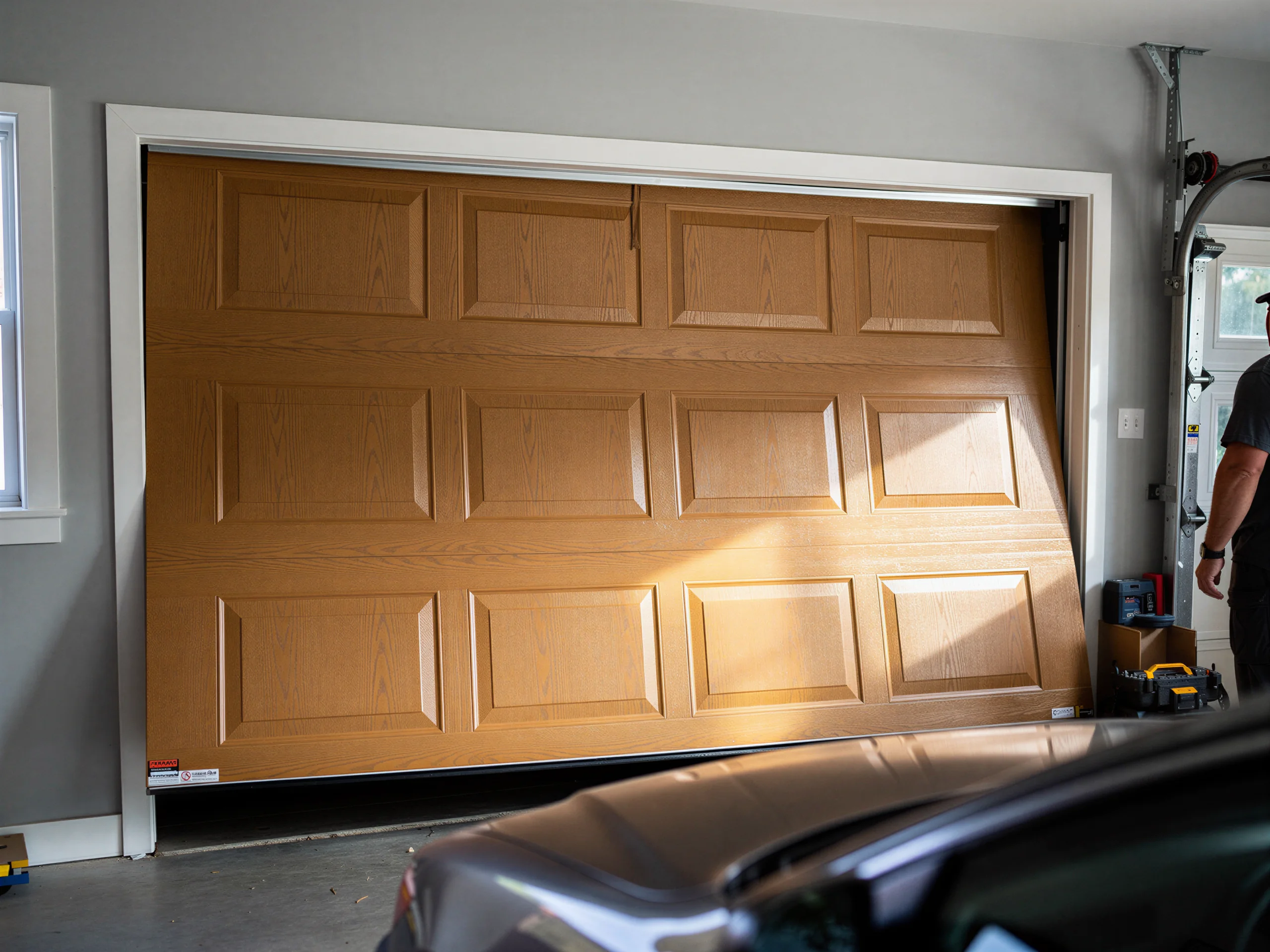
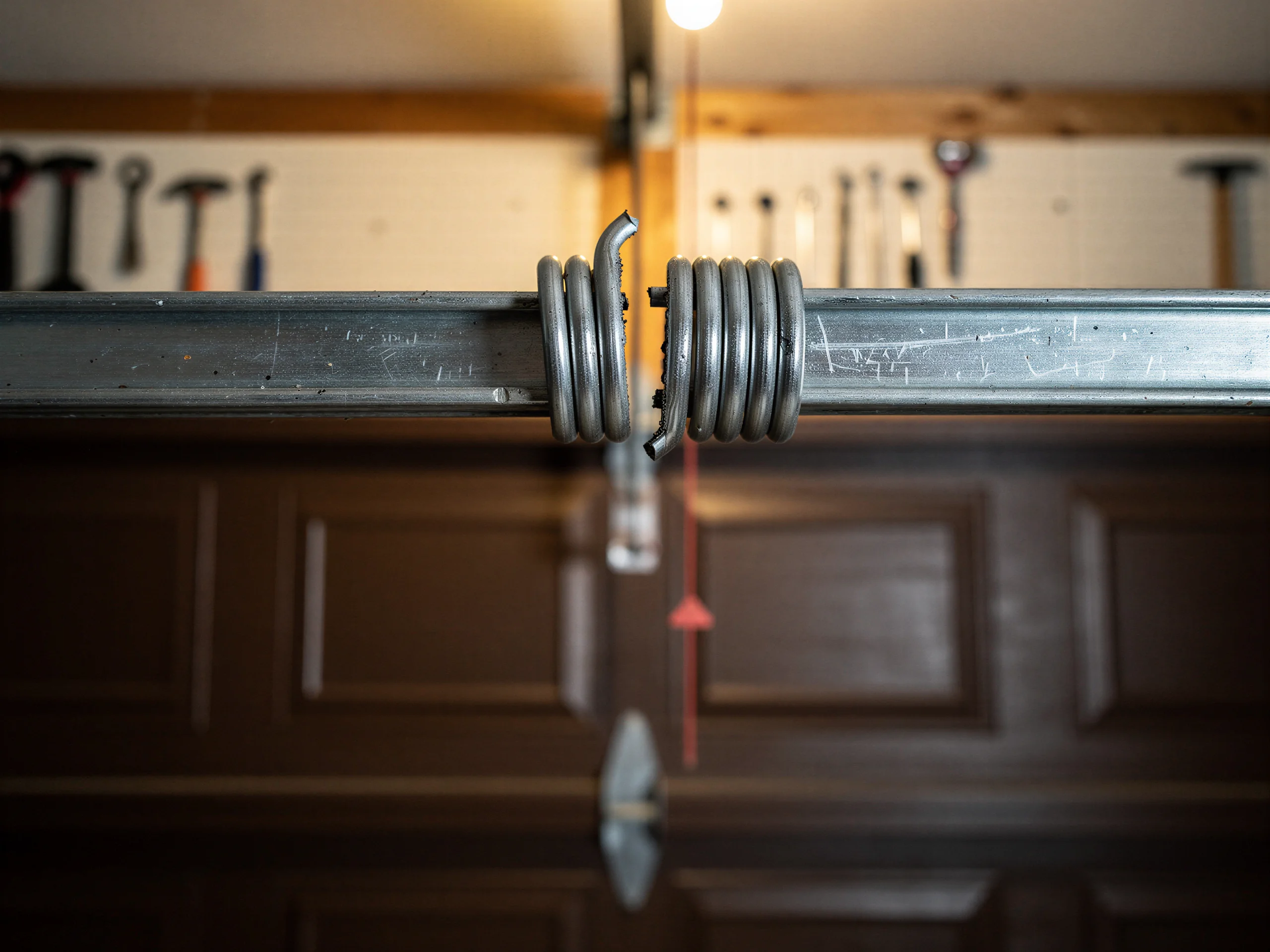
On doors from this build era, the most common call is a snapped torsion spring - the door won't budge, or it slams down fast when you try to lift it, because the spring that was holding the weight is gone.
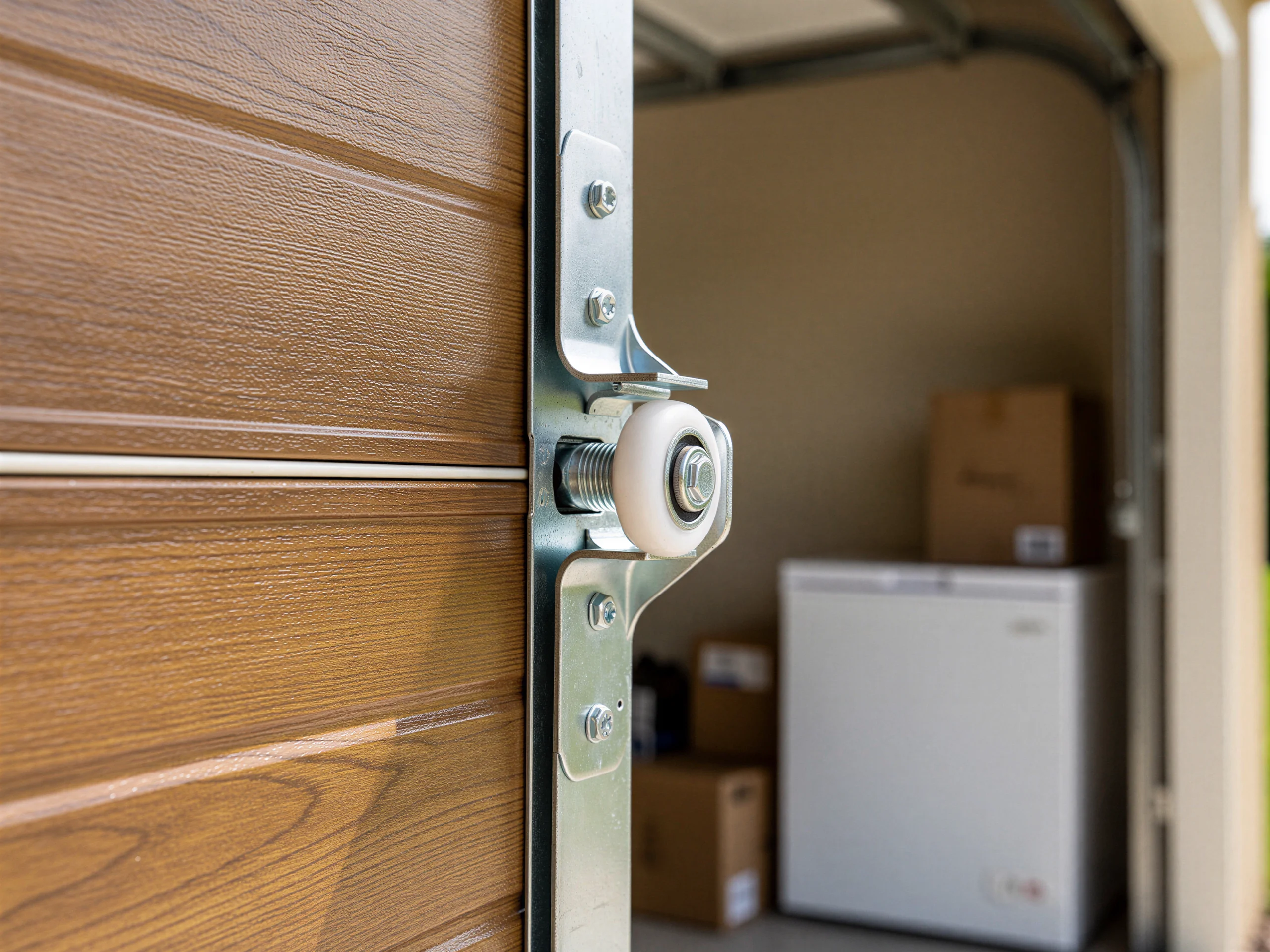
Nylon rollers on doors pushing twenty years old start cracking and binding in the track, which shows up as a grinding or popping sound partway through the cycle.
Chain-drive openers from the same construction wave are also starting to wear out their drive gears, so you'll hear the motor running while the door barely creeps, or not move at all.
A double door on torsion springs that's gone off-track usually means a cable jumped a pulley, not a bent track - the symptom looks similar but the fix is different, and it's worth knowing which one you've got before anyone quotes you a panel replacement you don't need.
Local causes
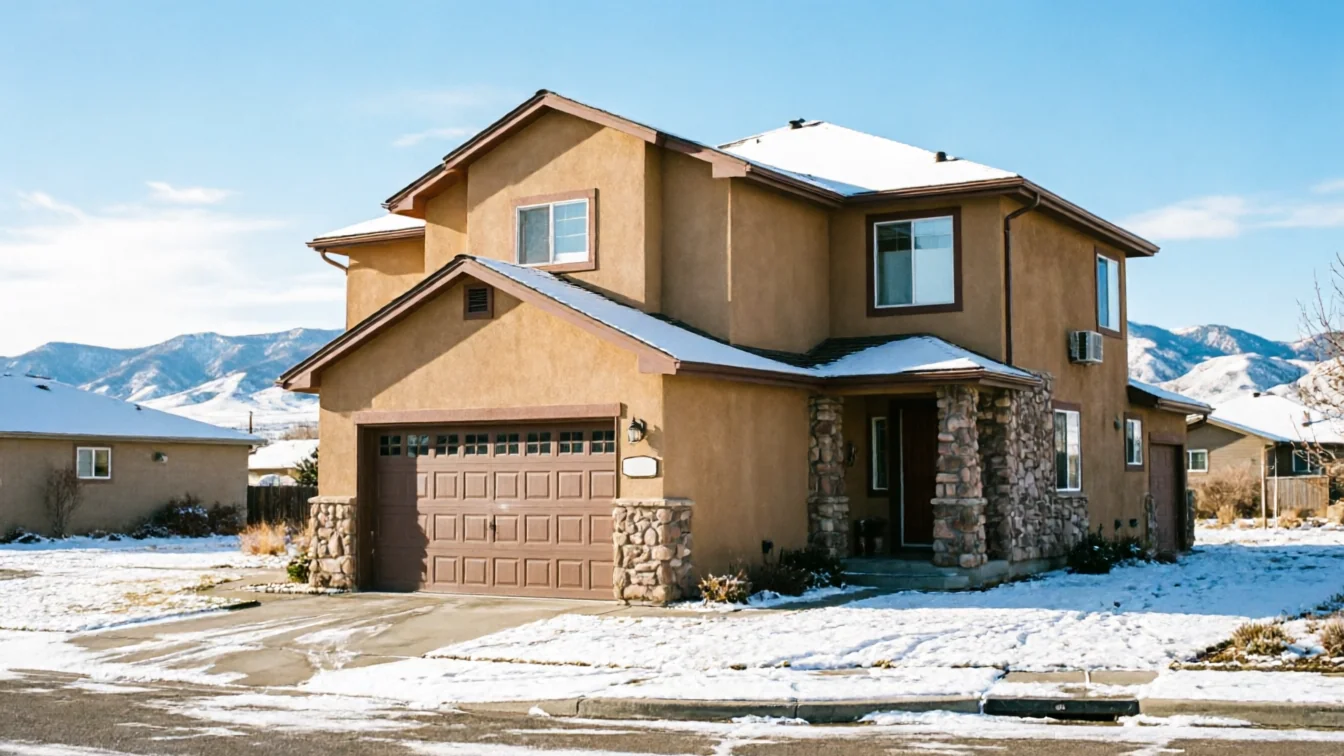
The service area sits in a cold-moderate climate band, and that matters more for a torsion spring than people expect. Steel contracts in winter cold and expands through summer heat, and every cycle through that range work-hardens the coil a little more. A spring on a West Richland house built around 2000 has already been through twenty-some of those seasonal swings, which puts it well into the range where metal fatigue, not any single event, is what finally lets it go.
Openers fare a little better since they're indoors, but the chain-drive units from that same build period are reaching the point where gear kits inside the motor housing wear thin from years of temperature-driven expansion and contraction on the drive train. None of this is damage from one storm or one cold night - it's accumulated cycles on hardware that's now two decades old.
Pricing
We don't post flat prices here because spring sets, roller kits, and opener gear kits all cost different amounts, and a job's price depends on which one your door actually needs.
What we can say is that West Richland's household income runs well above the median for the rest of our service area, and in practice that tracks with what we see on the doors themselves - more full double garages here, fewer single-car openings, which means more jobs involve two springs instead of one.
That's a real cost difference between houses, and it's one more reason we look at the door before quoting rather than quoting off a phone description. The honest limitation: if a door's track is bent badly enough, or the opener's circuit board has failed on a unit old enough that parts aren't stocked anymore, replacement can end up cheaper than repair. We'll tell you that straight rather than patch something that'll fail again in a season.
Booking
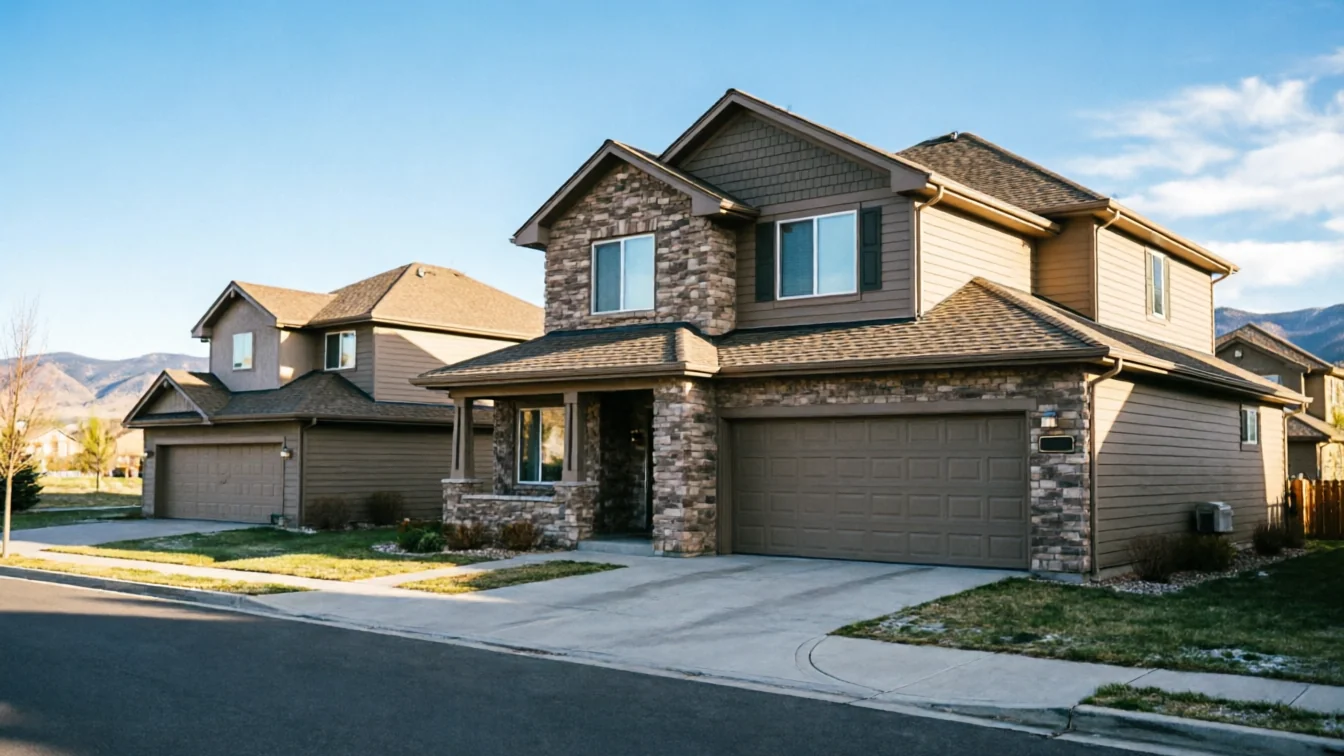
We run the truck out to West Richland from Kennewick, about 13 miles each way, so we schedule these calls with a time window rather than a same-hour promise - there's no local depot sitting closer, and we'd rather set an honest window than one we can't hold through traffic and the rest of the day's calls. Tell us what the door's doing - won't lift, slammed shut, opener running without moving the door - and we'll bring the hardware that fits a build-era door rather than showing up and guessing. If it turns out to be something we can't source same-day, we'll say so up front instead of after the truck's already there.
Questions
Different hardware era. A lot of the older stock nearby runs lighter extension-spring doors, while houses built around 2000 in West Richland commonly have heavier steel sectional doors on torsion springs. More weight means the spring has to do more work, and when it fails the door feels dramatically heavier by hand.
No. We run out of Kennewick, about 13 miles away, and cover West Richland from there. That's why we book with a time window instead of a fixed same-hour arrival - there's no local depot to dispatch from, and we're honest about that up front.
Usually both springs get replaced together even if only one snapped, because they're matched to carry the door's weight and age at roughly the same rate. One worn spring left in place after the other fails tends to go within a season, which just means a second call.
That's almost always a broken torsion spring, not the opener. The motor can run fine on a dead spring, but without the spring's counterbalance it can't lift the door's full weight, so you hear it working while the door stays put or creeps a few inches.
Explore more
Ready when you are
Kennewick Garage Door Pros repairs and installs garage doors, springs and openers in Kennewick, WA and the surrounding area.